

History
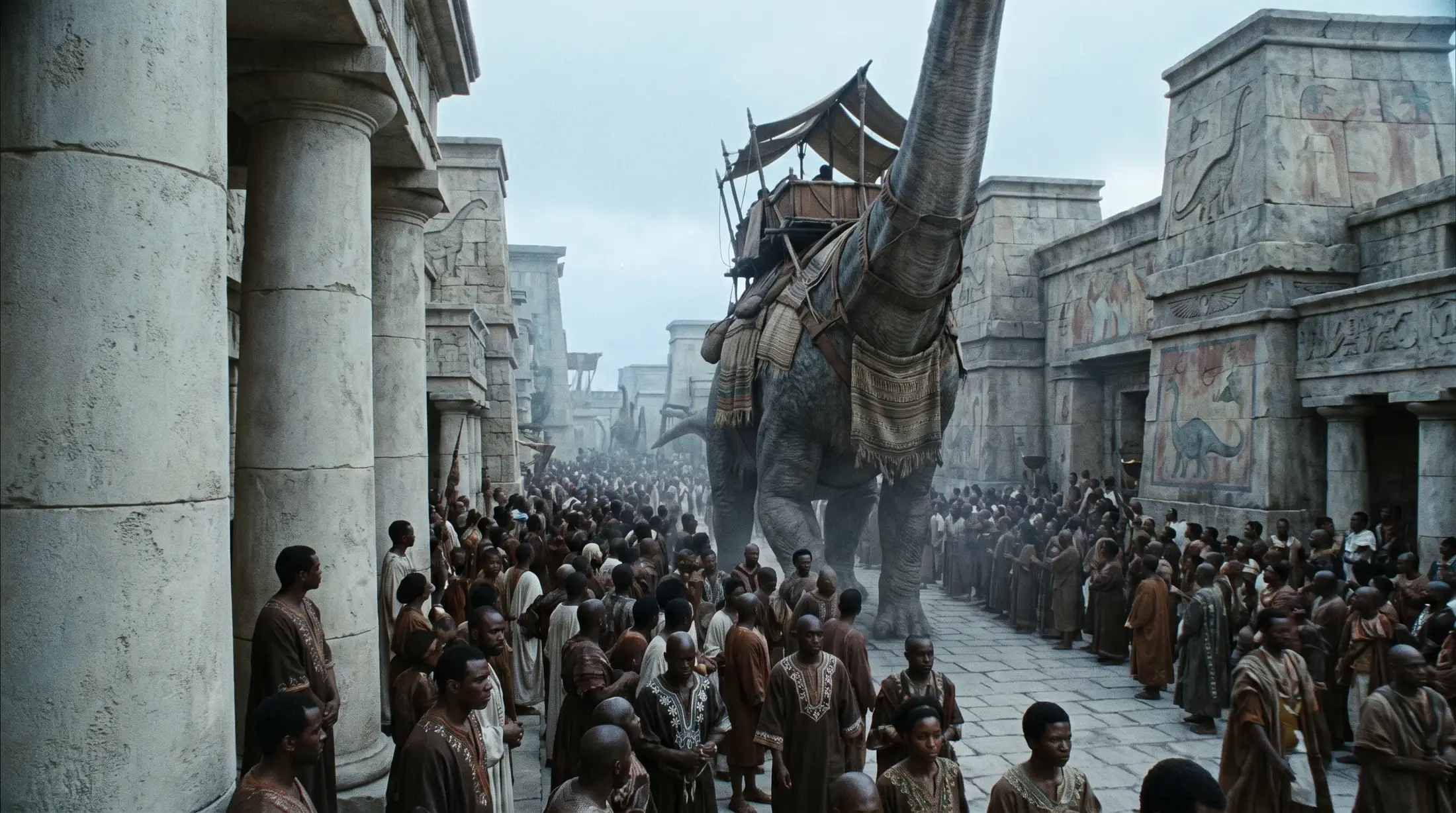
The Silo War
A famine turned into a smouldering civil war between starving duchies and granary duchies, brought under control by Marjory in her youth.
Before the war: certifying fodder
The certification of grain is older than this war. At a time when Urnok’s great clans still plundered one another’s granaries, seven of them swore to a common certification of fodder: this is the Council of the Silos, the embryo of the Diet of the Great Silos. It founded an institution that is neither a pack nor a cult, but a shared ledger.
From scarcity to war
A series of poor harvests strikes Sarnor, the Empire’s granary. Because grain has become a monetary value, scarcity turns into speculation: holders of reserves withhold fodder to drive up its price. The crisis becomes a smouldering civil war between starving duchies and granary duchies.
In an empire whose relays, convoys and great living animals depend on fodder, withholding a reserve weakens others without raising an army. The Silo War proved that starving others could become a weapon of state.
Marjory’s answer
The crisis is brought under control by a young Marjory. She imposes requisition, punishes withholding and refounds the Diet of the Great Silos. This war belongs to the making of the woman who would become the Empire’s administrative mind.
A living memory
The Silo War still belongs to living memory. In Sarnor, the regent Saba Orlenox tastes every ration herself before sealing it, out of honour as much as distrust: a living memory of that war. Sarnor’s granary remains one of the Empire’s most sensitive organs, and the power to feed or to starve is still a matter of sovereignty there.
Starving without raising an army
The Silo War does not begin with battles. It begins in the registers. When Sarnor’s harvests fail several years in a row, holders of reserves declare silos emptier than they are, sell in dribs and drabs at the grain hall and wait for the price to climb. Convoys leave less laden, relays receive less fodder, and the shortage spreads along the roads faster than the dearth itself.
The first to suffer are the territories that do not grow their own fodder: the capital, which produces only a small share of it, the quarries of Bralnor, where each quarry brachiosaur eats nearly a tonne a day, the garrisons of the marches. Draught animals are slaughtered for want of feed, salted meat floods the markets while the fields stand without teams, and day labourers without rations pour into the towns. In an empire that runs everything on its animals, every beast lost shrinks the next harvest.
Hungry duchies, granary duchies
The crisis sets two kinds of territory against each other. On one side the granary duchies, which hold the silos and can afford to wait; on the other the hungry duchies, which depend on other people’s grain to keep their roads, worksites and garrisons running. The war stays smouldering: no duke raises a banner against another, but convoys are seized at duchy borders, escorts are doubled, barges are held back at the canal gates, and armed bands attack isolated silos.
The records of the time speak less of battles than of closed roads, abandoned relays and lawsuits. That is what makes this war unique in imperial memory: it showed that a whole duchy could be weakened without crossing its border, simply by not selling it what it needed to eat.
The method of requisition
Marjory’s answer goes through proof. Escorted teams of Counters open the silos, sound them to the bottom and compare what they find with the declarations. What had been hidden is requisitioned, sealed and put back into circulation by escorted convoys; emptied relays are restocked first, because a road that works feeds all the others. The names of those who held back grain are read out in public, and hoarding becomes an offence that the law punishes as such.
Imperial tradition keeps from this method a way of governing: go and find the proof where it hides, bring it out, then make it visible. Scribes trained in those years carried its habits into every administration: write everything down, date everything, have the declarant sign, and come back to check.
What the war changed
The Diet of the Great Silos came out of the crisis refounded. The old assembly of certification became a body of control: reserves must be declared, sounded and certified every autumn, and a silo whose accounts do not hold loses its public rating. A reserve of special grade, tightly packed and salted, was laid down in the cathedral silos to see the Empire through several years of dearth, and it is opened only when a dearth is declared.
The law also keeps the mark of the war. Hoarding grain in a declared shortage is a grave offence, a false declaration of reserves a fraud against the Empire, and the Crown may order the requisition of private stocks without waiting for a trial to end. The private fodder houses survived the crisis, but under a watchful eye they have never escaped since.
How it is remembered
Those who lived through the Silo War are elders today, and they speak of it through details: the price of a bundle of fern, animals slaughtered in the yards, queues in front of the silos, escorts of Counters on the roads. In the villages of Sarnor those seasons are still called “the years of empty jars”. Many families have kept the habit of filling one more jar of grain than they need every autumn, and children learn early that a silo is something you check.
The war also changed the way the Empire looks at Sarnor. The granary there is guarded like a sanctuary, and every rumour of a poor harvest sends prices up at the Croisée-Silos hall the very next day. Fodder merchants know it, and so do the dukes: in the Empire one recovers from a lost battle, far less easily from a lost reserve.