Find the world’s nations, cities, characters, dinosaurs, trades and institutions. Search for a name or subject, then read the articles to understand their history, roles and relationships.
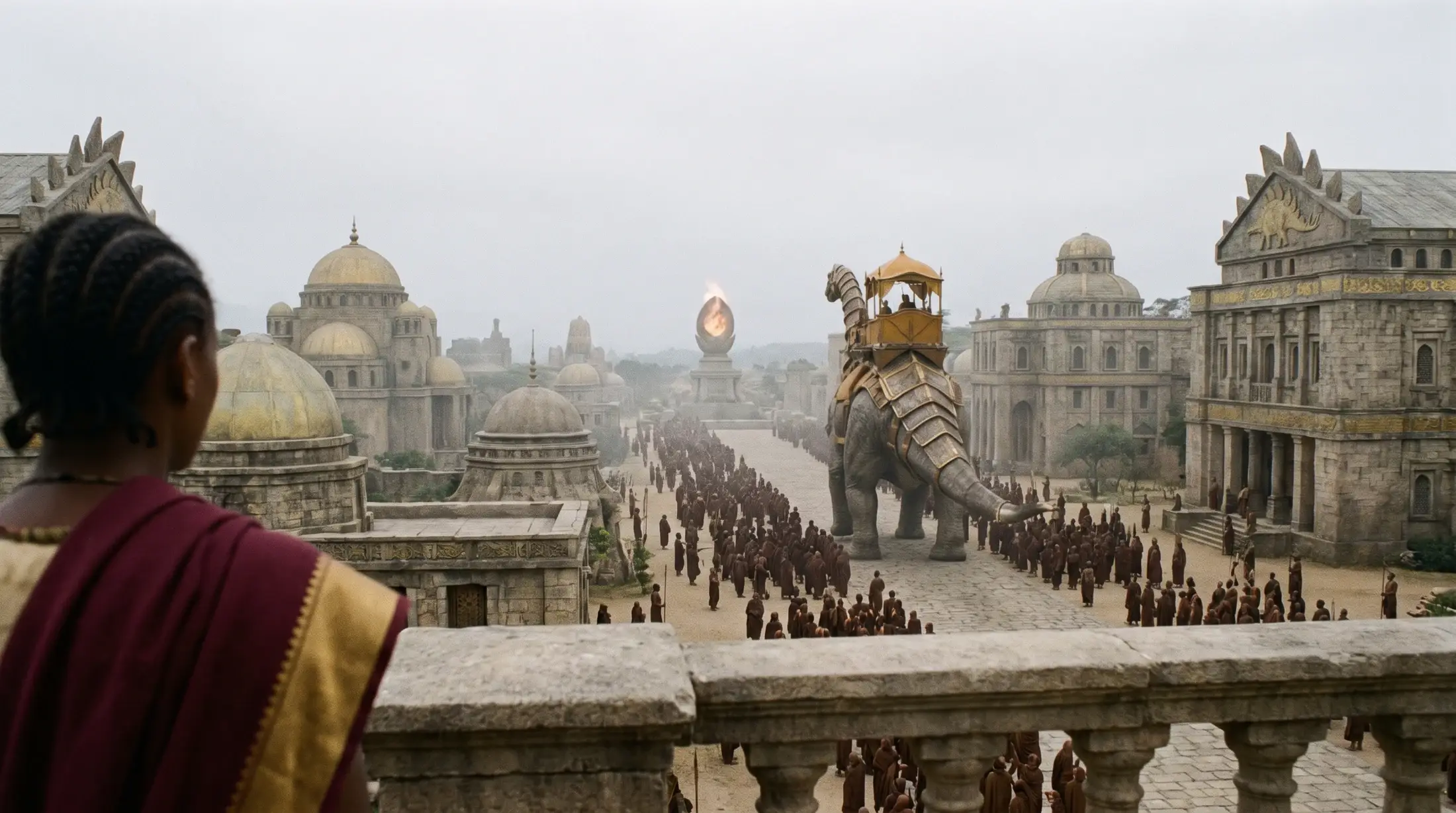
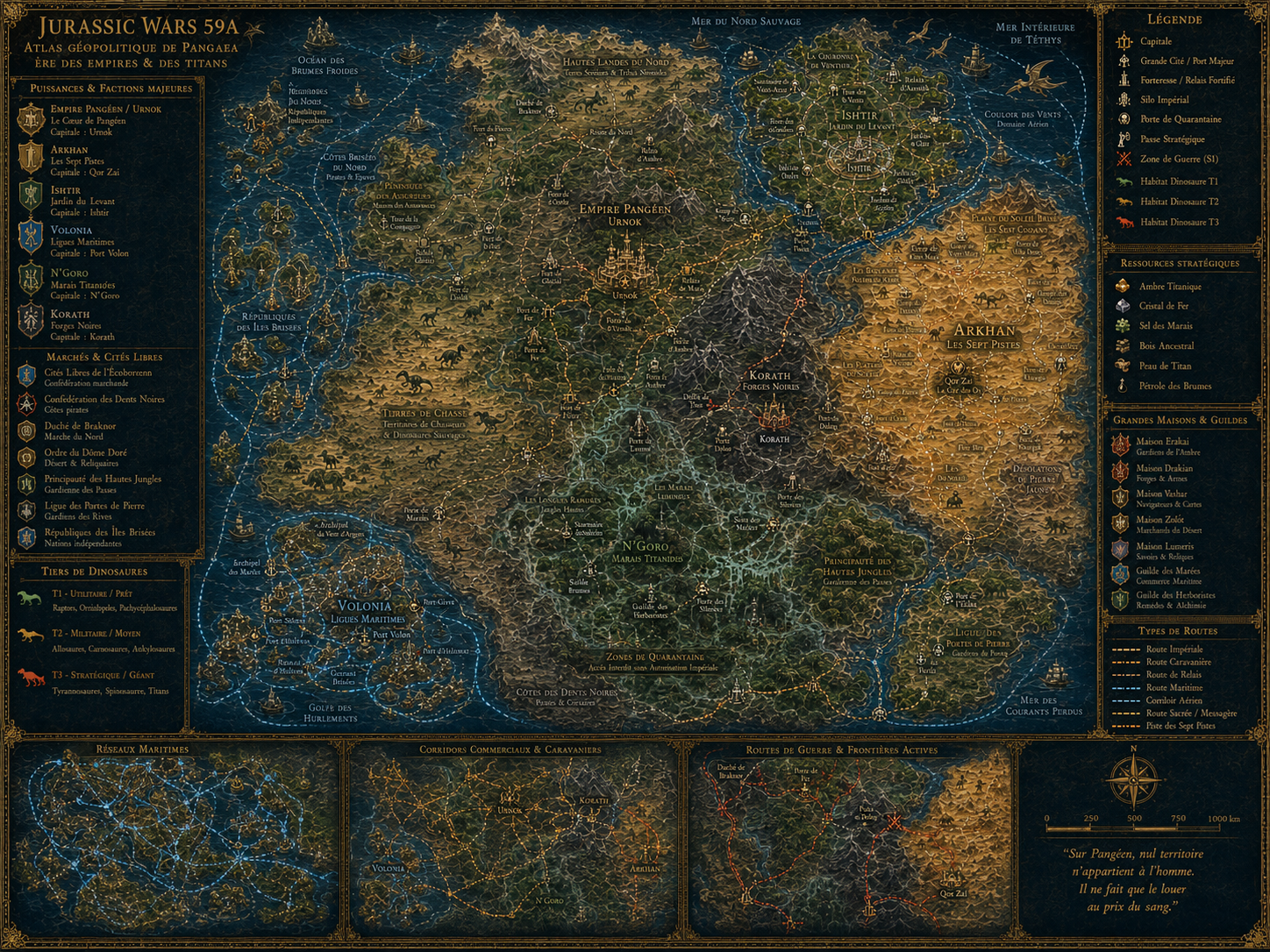
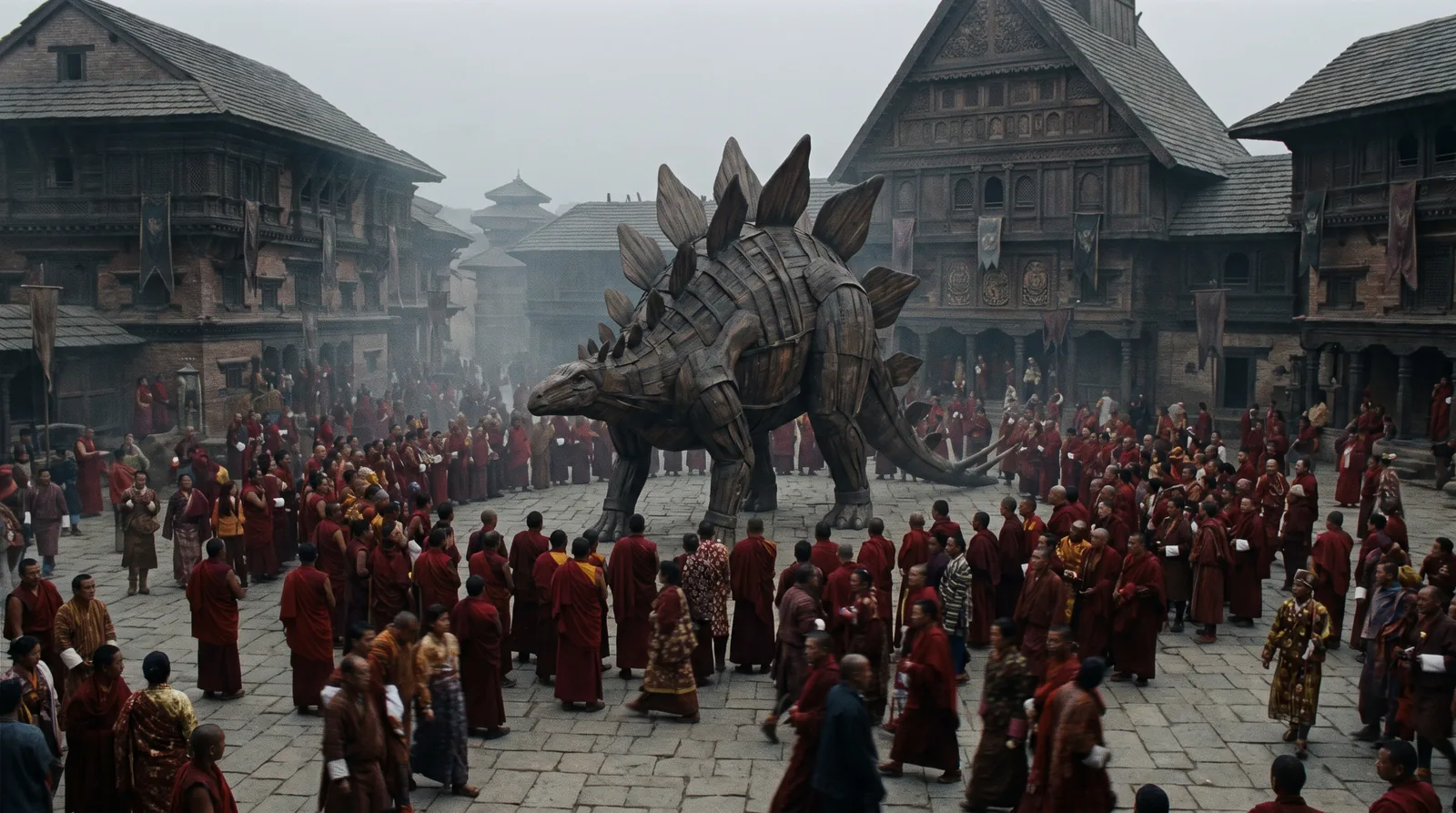
Thirty million inhabitants, six duchies and seven hundred titans. The Vael-Orûn family governs from Urnok; Houses and trade Lines hold the farms, forests, quarries, workshops and roads that feed the Empire’s wars: the marches facing Arkhan’s raids and the armed rivalries between duchies.
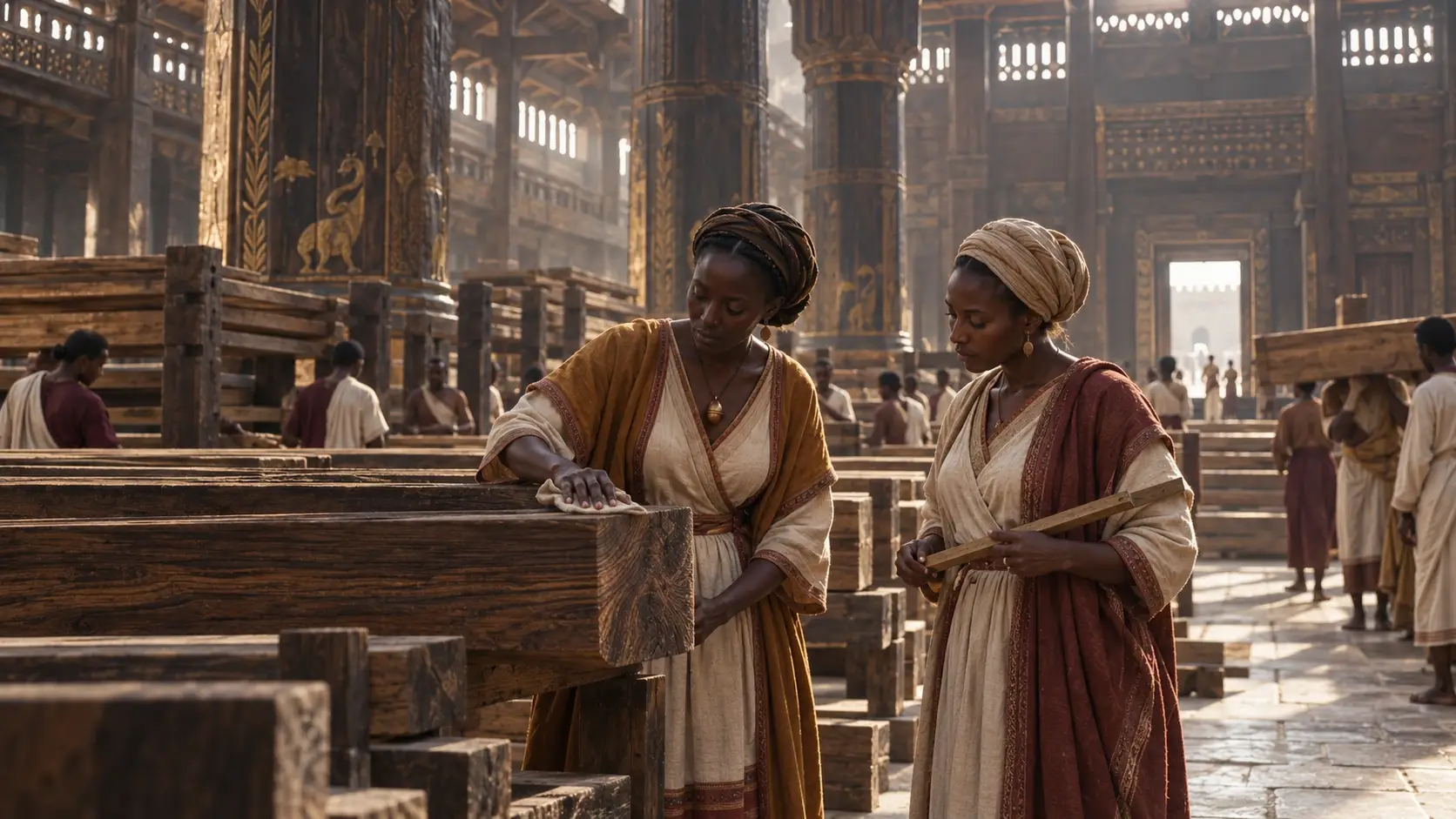
Orlantis · Mirvane’s tall working spaces and cranes allow trusses, bridges, halls and scaffolding to be assembled. Timber reaching this point has already passed through the upstream links.
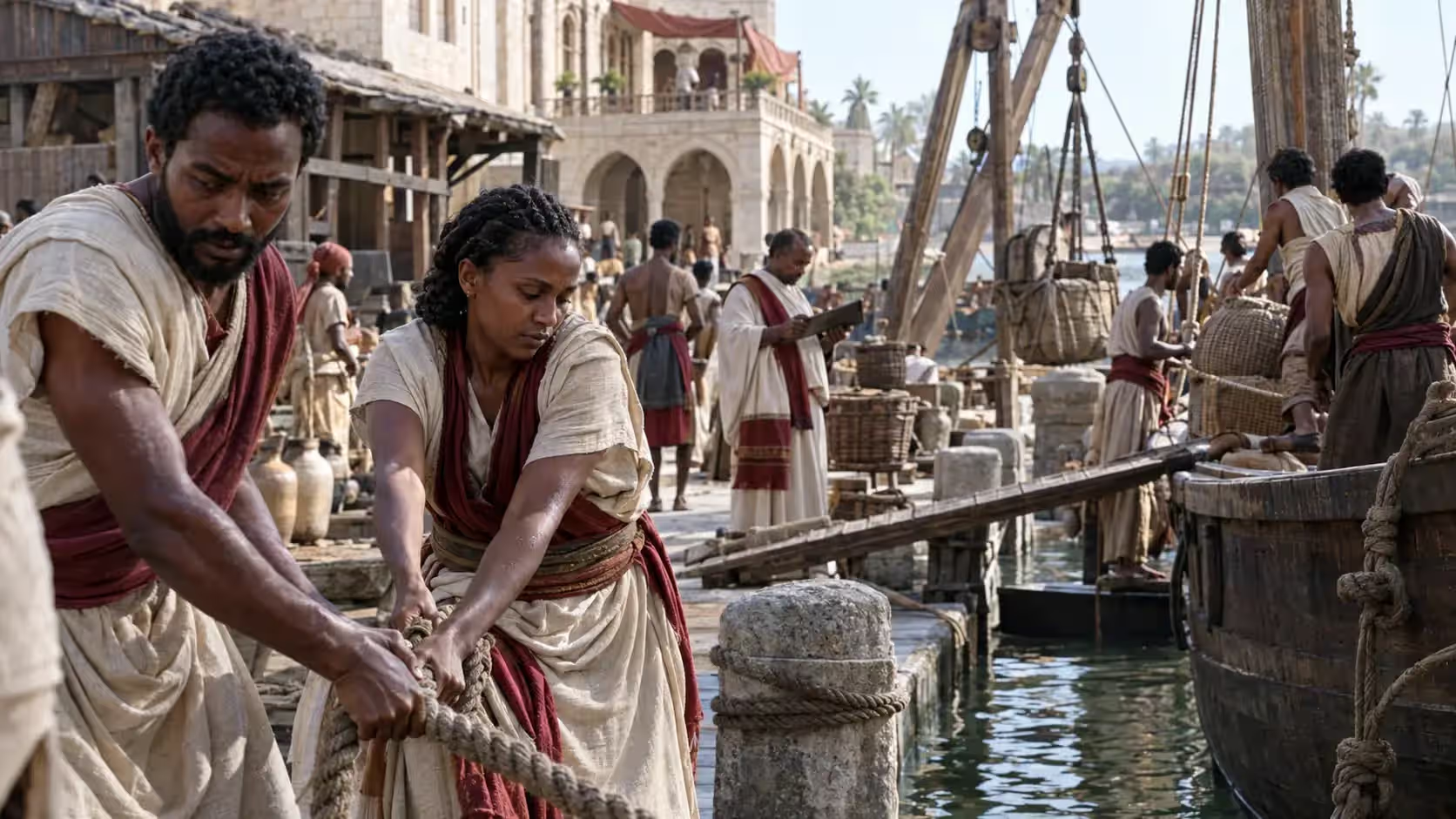
Orlantis · The chain reaches the Marlen line: downstream floating, ports and shipments to Volonia. The quay connects forest timber with maritime trade.
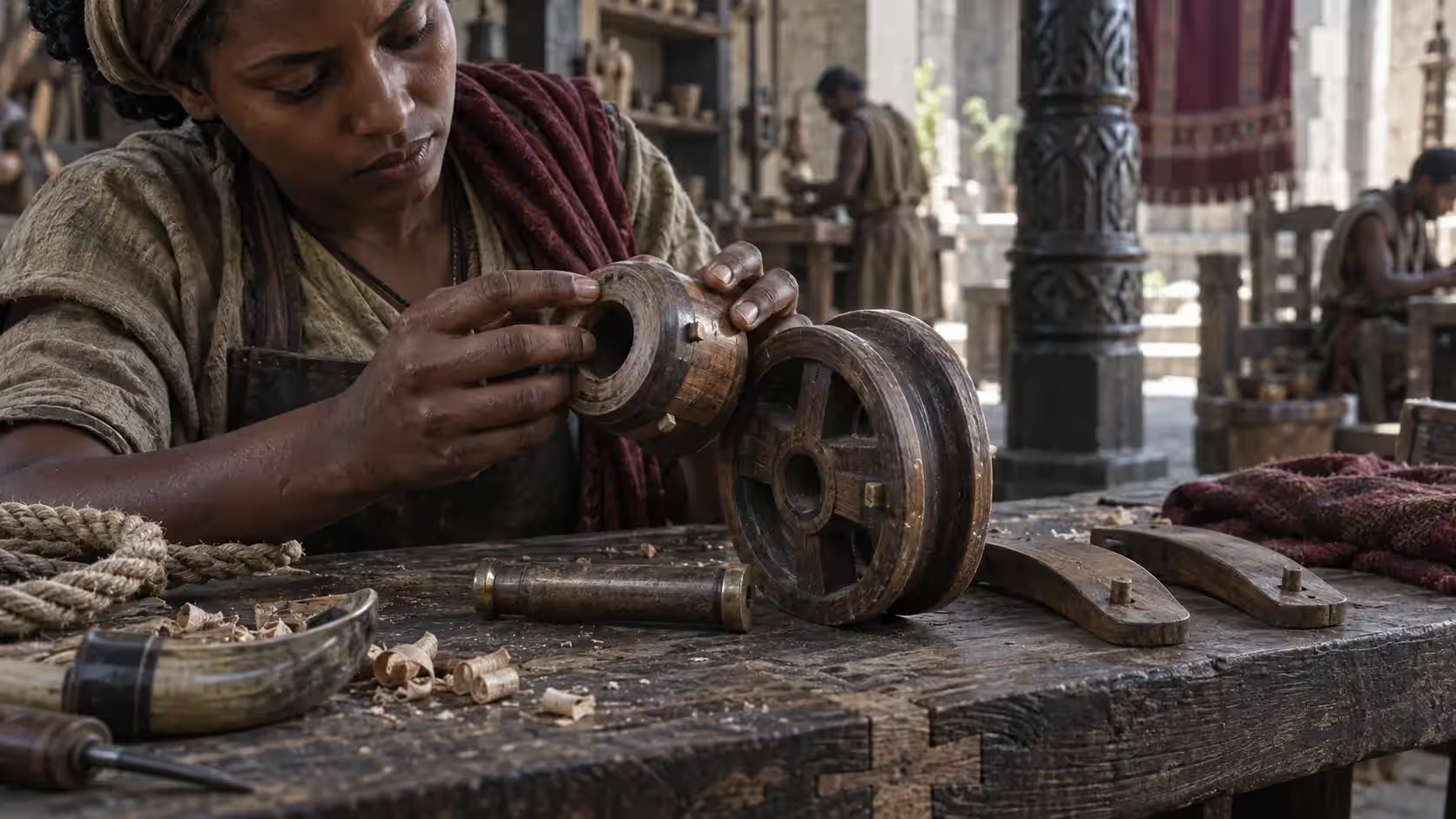
Orlantis · Between floating and turning, drying sheds and steam rooms form a link of their own. Steam-room workers, shingle splitters and timber calibrators belong to the duchy’s less visible trades.
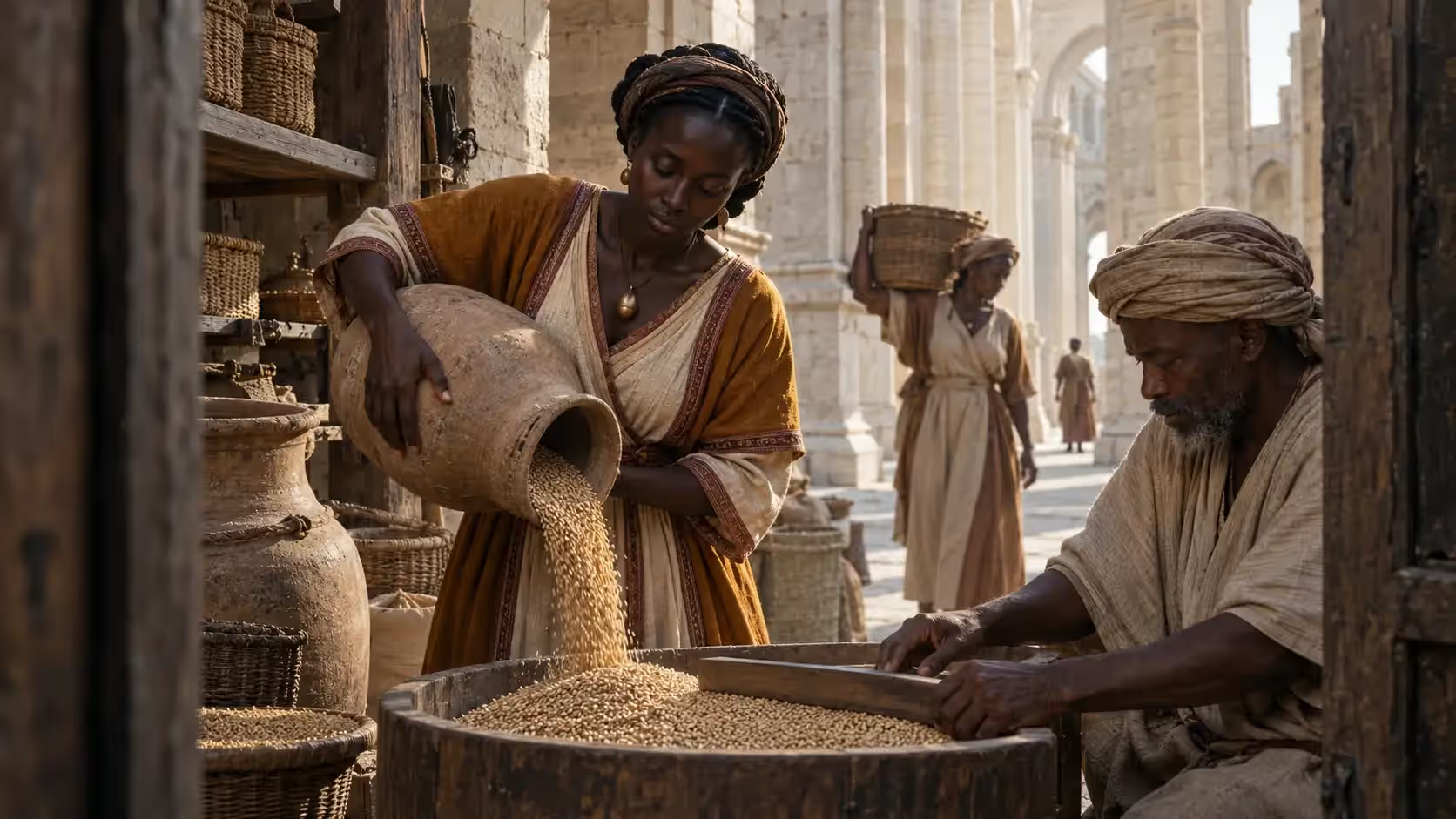
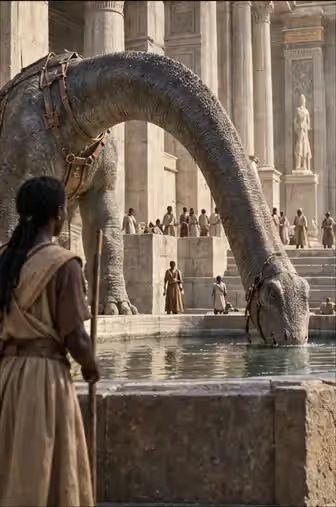
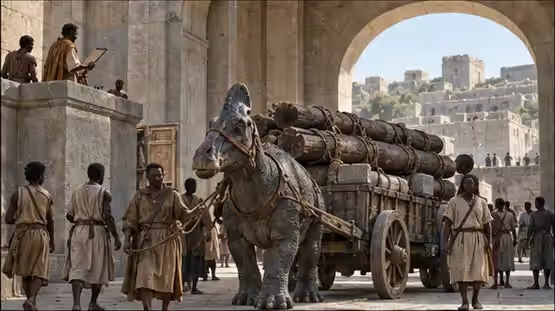
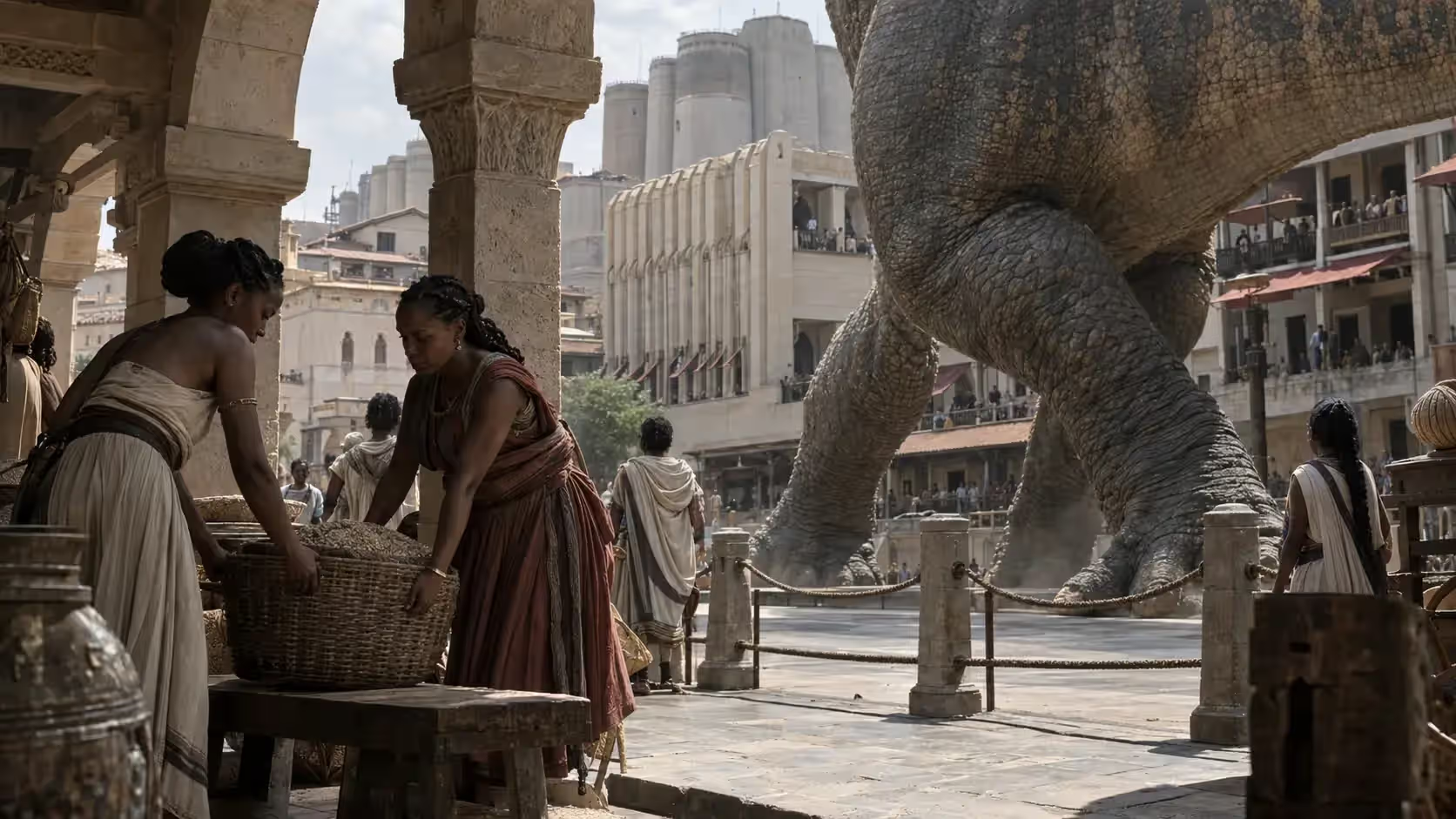
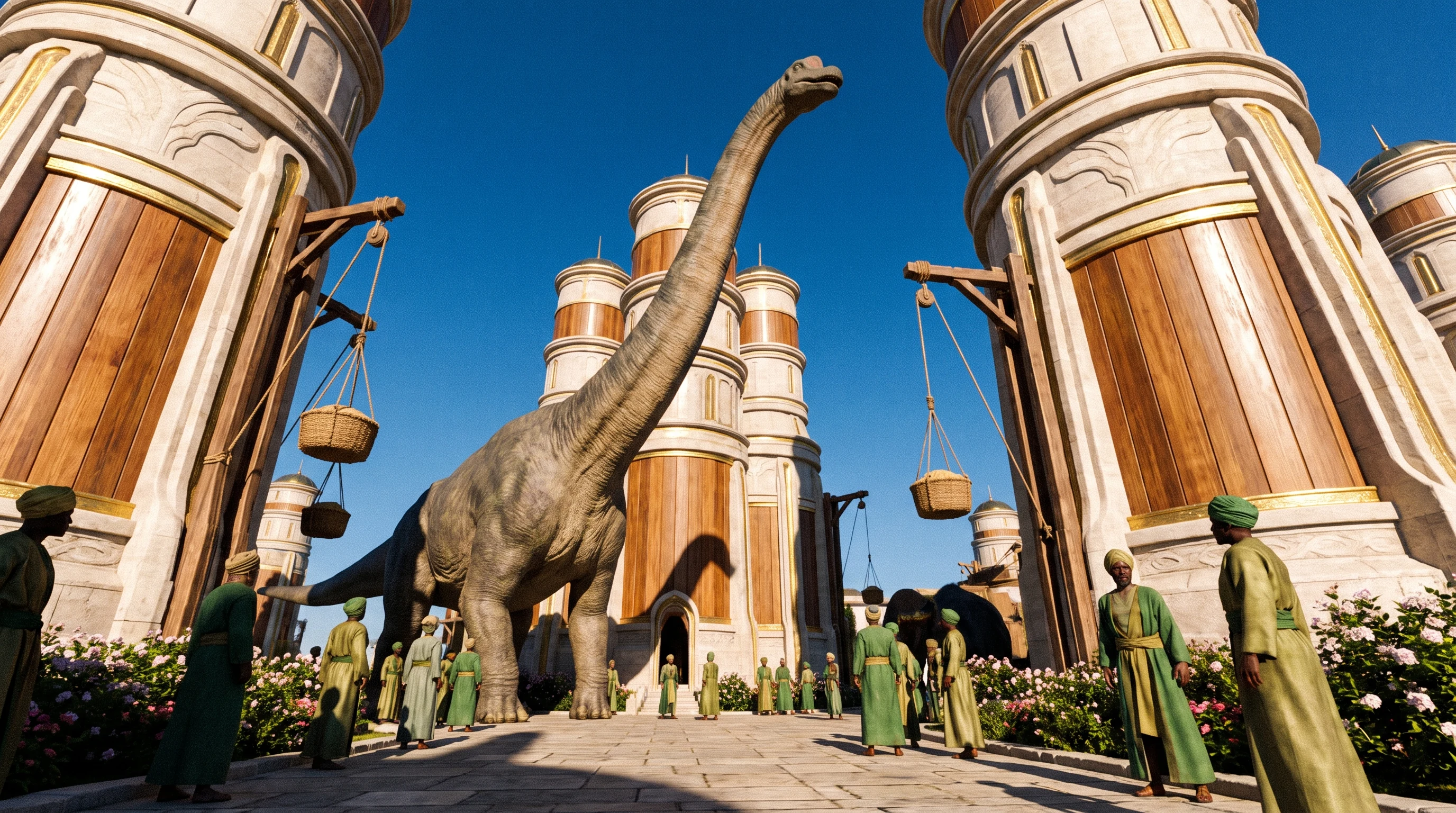
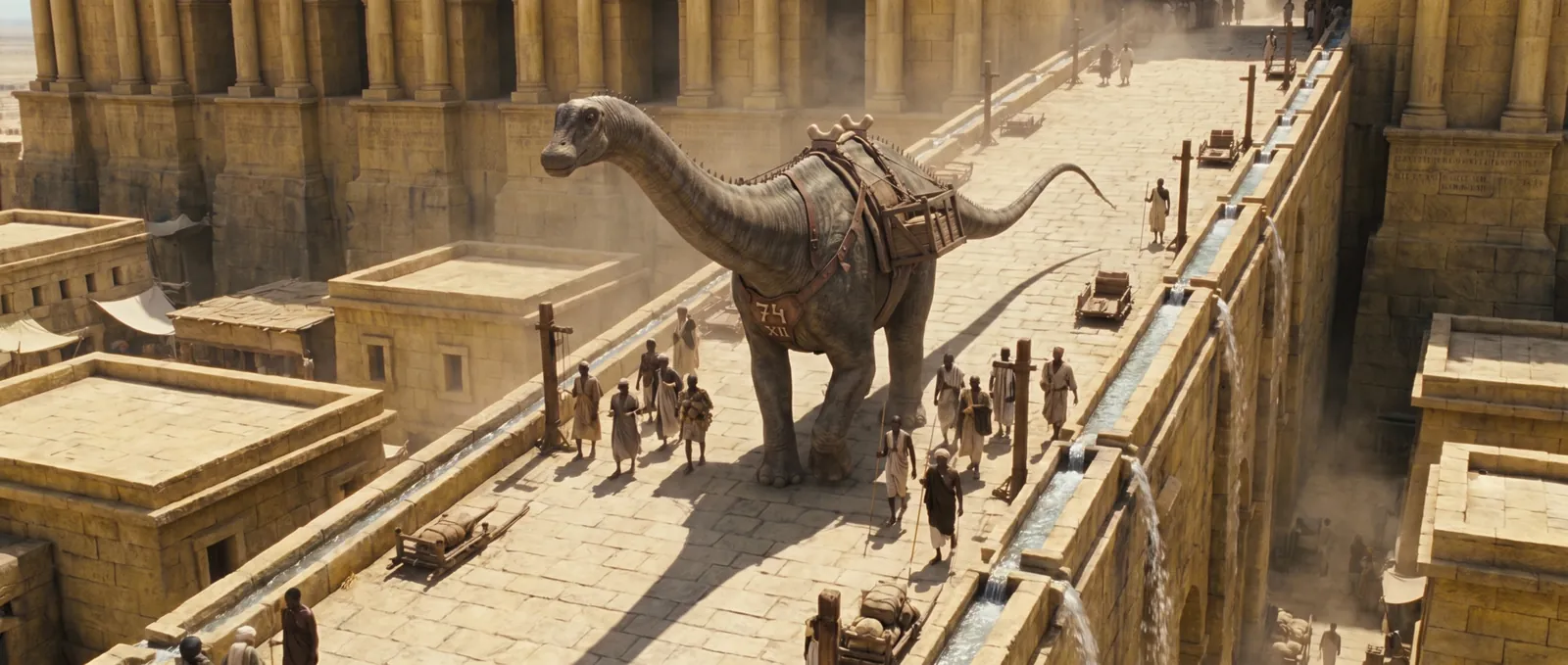
In Urnok, true greatness lies not in the palace but in the fodder chain. A belt of low stores, terraced granaries, inner docks where sauropods line up and ceremonial squares: the fodder station is at once depot, market and place of public accounts.
Urnok also thinks of itself as a river port. Fortified quays, towpaths, niches for living barges, customs, locks and transhipment stores extend the roads into the river and the canals.
Orlantis · Upstream in the urban chain, Berlan arrivals enter the log yards and then the floating basins. This is where material arrives before it is transformed.
Urnok’s prestige style: marble, domes and arcades crossed by rings, ironwork and polished winches worn like jewels. It dresses the noble districts, the seats of the great houses, embassies and universities: there the city wears its tools as finery.
Orlantis · Lomvar enclosures occupy an outer belt connected directly to the forest and the load-bearing road. Logging therefore has an access route that avoids the urban centre.
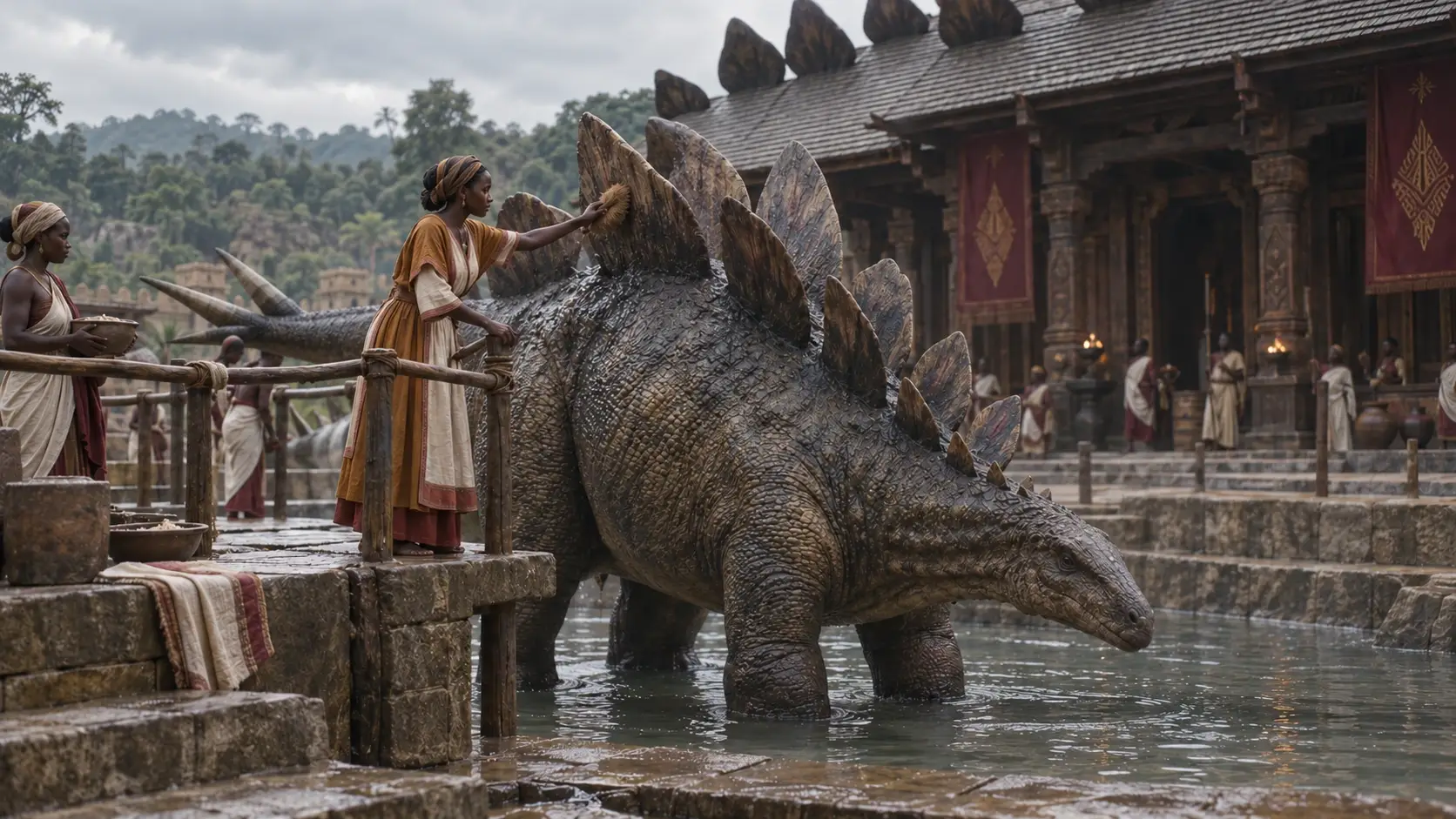
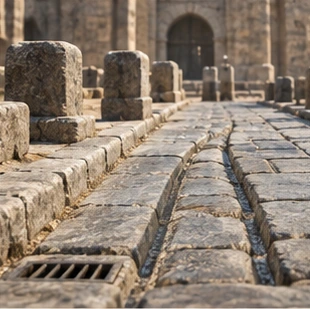
Orlantis · Thermal gardens can combine baths, a civic garden and a veterinary centre. Ramps, drains, non-slip surfaces, inspection platforms, brushes and ointments make care possible.
Urnok is an inland port of animals, eggs, leather, bone and fodder. To hold back disease and parasites, its gates are thresholds: curved corridors, steam rooms, baths, polygonal airlocks and lines of pale or dark stone that separate clean from dirty.
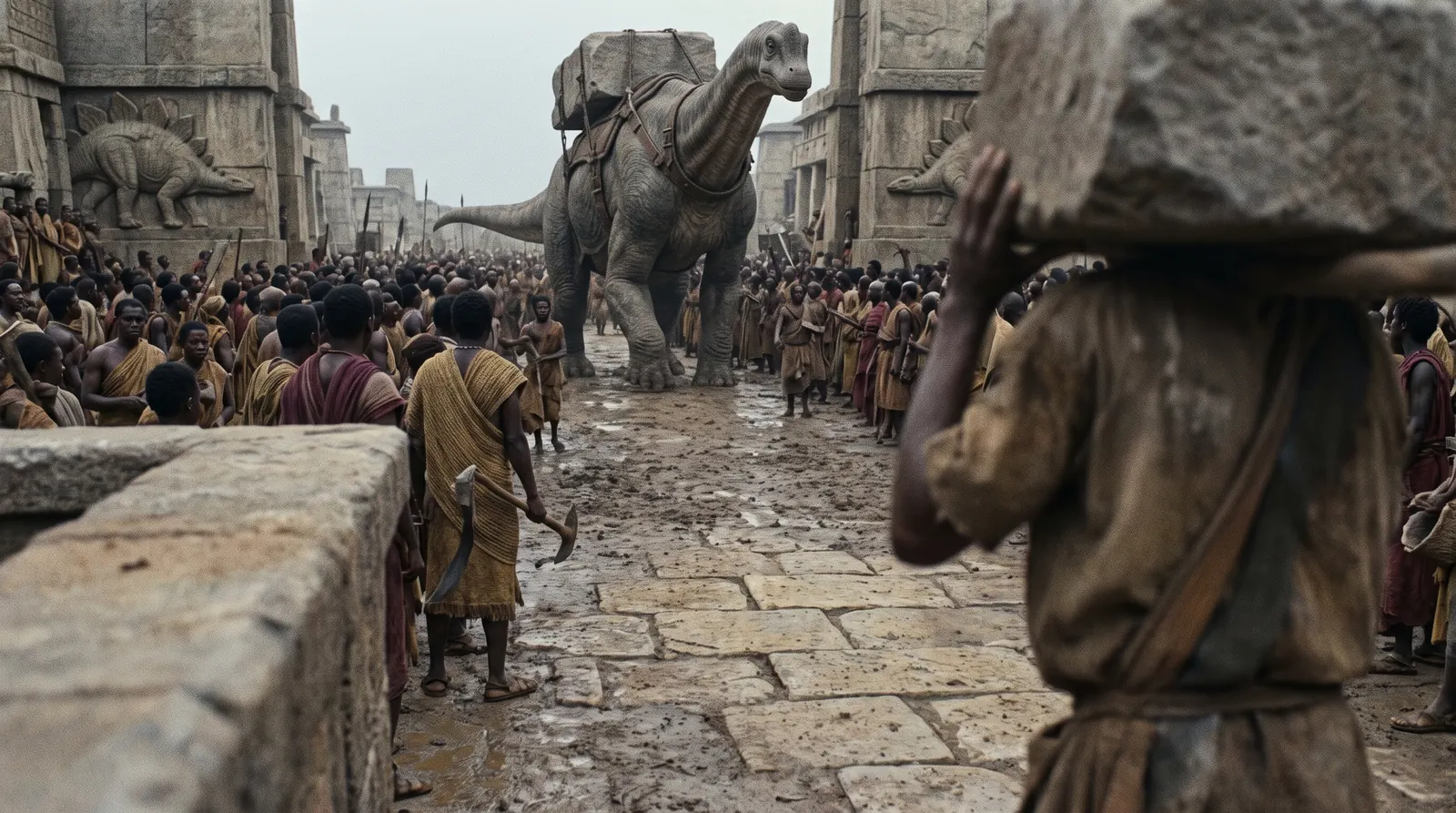
An Urnok style in which temple-palaces are gently sloping pyramids that heavy traffic can climb, and gates are curved throats that swallow columns of animals. The façade serves as an engraved traffic map, and one passes under the guardians’ throats.
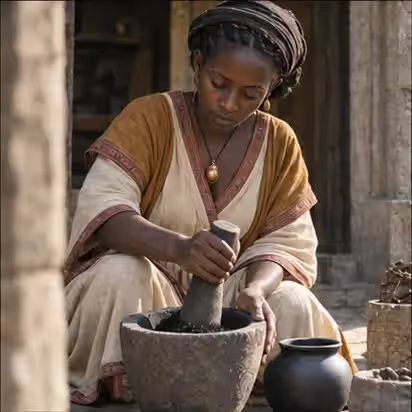
Orlantis · Tapping supplies the Aversin line; cooking produces pitch, varnish and balms. Fire requires these sites to stay downwind and outside the walls.
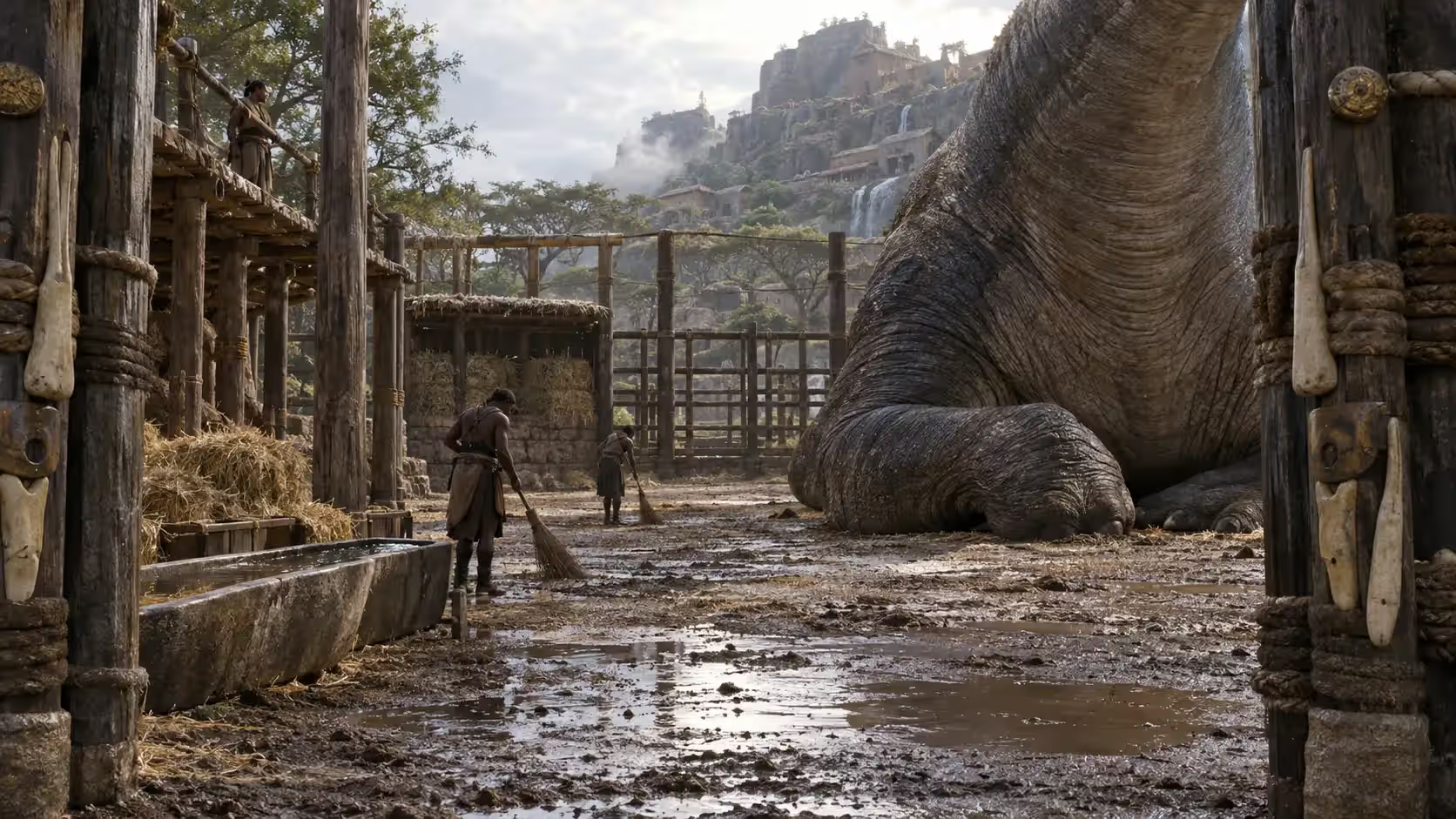
Along the entry roads, in quarantine zones and river stations, immense low naves let animals rest in the shade beside side basins. With roof courts and resting yards, they make the pause part of the architecture.