
Nets, traps and cages
Braiding and assembly answer different uses: fishing, holding or transporting.
Mesh for different uses
Enclosure-net makers and fishing-net makers work for distinct uses. Their materials join fibre braiding, ropes and knots. Mesh alone does not define a function: fishing, capture and enclosure protection belong to different uses. These places’ needs give several outlets to the trade working with bindings.
A cage draws on several workshops
Boarding-cage joiners, makers of flap traps and makers of holding-pond cages shape several ways of keeping or catching. Timber, bone, leather, bindings and small metal components can enter assemblies according to use. The combination depends on the body to be held and its use; no identical recipe gives every cage unlimited strength.
Holding leaves needs to meet
Ventilated crates serve live transport. Around animals, buffer enclosures, water, care access, human refuges and waste exits form a network of work and safety. A holding device therefore fits into a larger workplace. Closing a barrier does not replace the trades and routes needed around the body being kept.
Capture nets and guard nets
The commonest net is of braided liana and costs less than a Draco; it serves for fishing as well as for capturing small animals. For larger beasts, takers use nets weighted with stones, stretched between two trees or thrown from a height, and combined with pits dug across the passages. The bands that work this way in the wild plains bring back young herbivores alive, resold to the farms of the marches to be trained there.
The mesh depends on the prey. Too wide, it lets the animal through; too tight, it grows heavy, catches the wind and tears under strain. A net-maker knows his proportions by heart, and he knots a fishing net, a capture net and an enclosure net differently, the last of which must withstand years of head blows and bites.
Nets also protect from the sky. To defend a coast, a road or a camp against pterosaurs, the Empire raises net masts combined with ballista batteries; in Velmor, the anti-aerial nets are made from the ropes of Orlantis.
Fishing with animals
At sea, Volonia fishes with its animals. Its largest bottom nets, weighted and several hundred metres long, are drawn over the deep banks by two fishing plesiosaurs harnessed on either side, and each net costs some fifteen Dracos. The boats follow, haul up the catch and salt it in the holds.
The fish-trap setter works closer to the coasts and rivers. His flap traps let the fish in and stop it getting out; he sets them in the evening and lifts them at dawn. His trade has a second role: in lifting his traps every day, he sees what passes in the water, and the ports also pay him to report the great marine predators that come near.
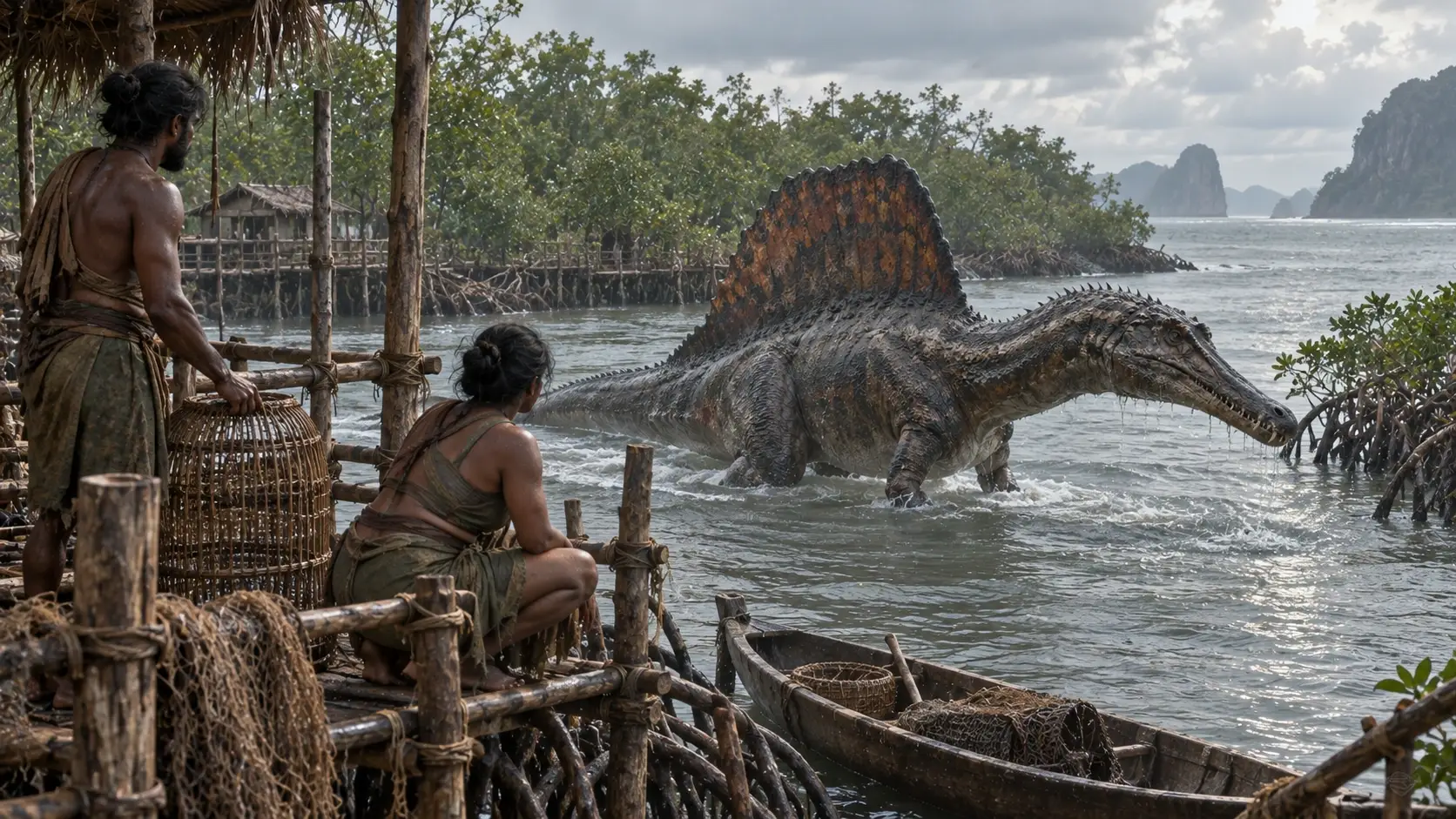
In the backwaters of the wild lands, the Mol-Vethra tribe sets giant fish-traps from rafts of bone, and the merchants who have seen them say a man could walk into one standing up.
Cages, crates and live-wells
A cage is not made to imprison but to transport without harm. The raptor transport cage, of calibrated bone and iron, with bars reinforced with tendon, costs some twenty Dracos: it is what allows a living predator to travel as insurable merchandise. It is just large enough for the animal to stand without being able to turn round violently, which stops it injuring itself against the bars.
Marine cages are more complex. Floating and ventilated, they carry rare animals by sea and cost more than a hundred Dracos; hold live-wells, lined with copper, constantly renew their water to keep noble fish and crustaceans alive. The joiners of boarding cages make the ramps and doors that allow an animal to be brought on board without panicking.
Every cage requires a service around it: water, shade, food, a handler who knows how to open and close without being bitten. The Volonian insurers refuse to cover a caged animal if it travels without its handler.
In war
Nets and cages have their place in the arsenals. At sea, merchant ships stretch nets along their sides to prevent boarding, and pirates throw weighted nets onto the decks to entangle the defenders. On land, nets stretched across a path stop light cavalry, and pit nets hold a predator long enough for the lancers to reach it.
N’Goro has made the cage a weapon. Its dart-cages, stretched with silk, contain a war swarm and are carried by two men or on a barge; they are opened only on a marked target, and a bearer who opens one at the wrong moment becomes the swarm’s first victim.
Captives, finally, often travel in cages, and the joiners who make them do not ask what will be put inside. It is one of the aspects of the trade that craftsmen talk about least.