
Families and
trades of Urnok.
A name. A trade. A door to knock on when something gives way.
Open the family registerHouse
A duchy or an imperial function
High Line
A chain, from material to product
Line
An intermediate product
Short Line
A workshop, one lifetime, not inheritable
A Line is an address of responsibility.
Family register.
Houses and Lines of Urnok.
6 entries
Choose a name to read its history and function.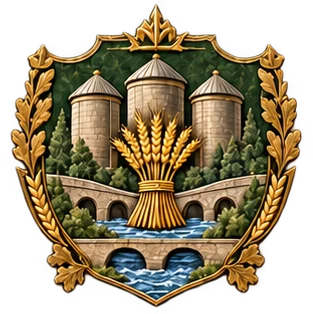 OrlenoxSarnorDucal House of SarnorHouse
House Orlenox holds Sarnor, the agricultural duchy of granaries, grain and fodder. Teren Orlenox is a child duke; the territory is governed through a regency. The House notably owns the Gué-Long cathedral granary, but the reserves are divided among several dozen granary families. Karnil keeps the granaries of the Upper Ford, Ulmen the seed and draught lineages, Corsen the basins and irrigation, Tanoris rationing and convoys, Marlen the mills. The Orlenox properties form one part of the agricultural whole, alongside stocks and rights belonging to other Lines. The farms feed the population and supply the transport animals; the breeding reserves sustain future harvests. A delivery of fodder requires granary keepers, carriers and halt managers to be able to work together. The name Orlenox belongs to an ancient layer of Sarnor.
Read the article: OrlenoxLa réserve fait autorité
Sarnor · administration des silos.
- Material or function
- Grain, seed, reserves
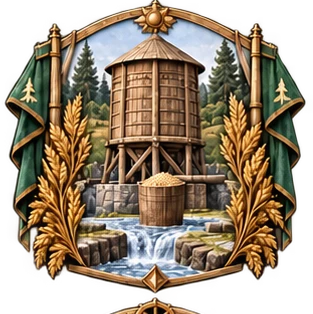 KarnilSarnorUpper Ford granariesHigh Line
The Karnil hold the cathedral granaries of the Upper Ford. Their registration is the oldest in Sarnor and predates Unification: the family has kept its place in an agricultural history longer than the imperial administration. These reserves belong to the distribution of stocks among several dozen Lines, alongside the granaries of House Orlenox. Keeping a granary is a responsibility distinct from producing seed, conveying water, milling or organising convoys. The Karnil work within a chain in which Ulmen, Corsen, Tanoris and Marlen hold other functions. The stored grain must still be processed or carried to the people and animals for whom it is intended.
Read the article: Karnil- Material or function
- Grain storage
 UlmenSarnorSeed and draught lineagesHigh Line
The Ulmen hold the seed and draught lineages of Sarnor. Their agricultural reserve is intended for future harvests; it has a different function from the grain available for immediate consumption. The breeding of draught animals also commits the continuity of transport and work. The Ulmen registration distinguishes these reserves from those of the granary families and from the transport rights held by Tanoris. Corsen’s basins and canals sustain the crops; Marlen’s mills turn other lots into food. Consuming a seed reserve would reduce what can be planted: the destination and custody of the lots must therefore remain identifiable. The role of the Ulmen extends production from one season to the next within the duchy’s agricultural supply chains.
Read the article: UlmenSarnor — la chambre des semences
La semence est protégée dans des récipients et une pièce dédiée.
- Material or function
- Seed
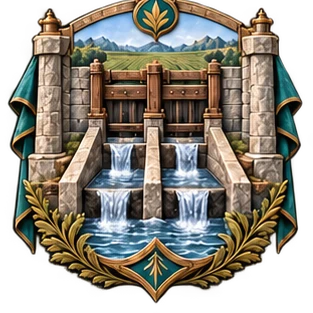 CorsenSarnorBasins and irrigationHigh Line
The Corsen High Line holds the basins, sluices and irrigation canals of Sarnor. It answers for the works that carry water to the farmland, with a responsibility distinct from owning the grain, keeping the seed and organising the convoys. Hydraulic work uses gravity, dykes, basins and conduits; sluices and readings make it possible to follow the flow of water. An interruption affects the crops and the activities downstream before it has repercussions on the reserves. The territory of Sarnor combines the production of the fields with the continuous upkeep of these works. Corsen takes part in this chain alongside granary keepers, millers, seed families and carriers.
Read the article: Corsen- Material or function
- Water and hydraulic works
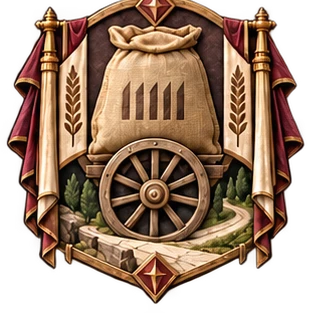 TanorisSarnorRationing and convoysHigh Line
The Tanoris of Sarnor hold rationing and convoys. Their function is the right to move grain, distinct from ownership of the reserves transported. They link the granaries to the places where people and animals must receive their food, through a network of roads, relays, water and fodder. A delivery depends on the availability of the lot as much as on that of the crews, the draught teams and the passages. Storage bodies and transport trades answer for different links. Another Tanoris Line exists in Orlantis, where it prepares the bark tannins used by the tanneries. These two families hold different registrations; their shared name does not establish kinship. The duchy and the product make it possible to tell their charges apart.
Read the article: TanorisLe dernier convoi du soir
Sarnor · orientation du troupeau.
- Material or function
- Transport rights
 MarlenSarnorMilling and flood millsHigh Line
The Marlen of Sarnor hold milling and the flood mills. Their activity turns the cereals kept in the reserves into products intended for food. It sits between storage and distribution: keeping a lot, milling it and moving it are different responsibilities. The availability of the mills depends on water and on deliveries, while the convoys must carry the products to the places of consumption. Marlen works in contact with the other agricultural supply chains, notably Corsen’s works, the granaries and the Tanoris’ transport rights. The name Marlen also exists in Orlantis for downstream floating and the ports. The two registrations designate distinct trades in two duchies; the name alone does not allow a common genealogy to be attributed to them.
Read the article: MarlenSarnor — le moulin, reprise photographique
La meunerie relie le grain à la force de l’eau.
- Material or function
- Milling
Trade chains between duchies.
Orlantis bark feeds tannin, tannin feeds tanneries, and leather feeds Velmor’s harnesses. Bralnor’s great animals pull stone; Sarnor’s grain pays for the work. Records are written in Ombrin ink.
Follow the material through Orlantis- OrlantisBarkTanoris
- VelmorHarnessTanneries & leather
- BralnorStoneHeavy traction
- SarnorGrainPayment for the work